
Shalimar Bagh | The Abode of Love, Kashmir's Largest Mughal Garden
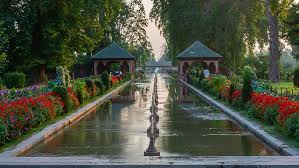
Shalimar Bagh sits on the northeastern shore of Dal Lake in Srinagar, and at roughly 31 acres (12.4 hectares), it's the largest of Kashmir's Mughal gardens — bigger than both Nishat Bagh and Chashme Shahi. It was built in 1619 by Emperor Jahangir for his wife, Empress Nur Jahan, and has been known through history by several names — Farah Baksh ("the delightful"), Faiz Baksh ("the bountiful"), and today, simply Shalimar, "the abode of love."
This guide covers Shalimar Bagh's history, its three-terrace layout, entry fee and timings, and the best season to see it — written for travellers planning a Srinagar garden circuit.
Historical Legacy of Shalimar Bagh
The site's history predates the Mughals by a thousand years. Local tradition, recorded by Jammu & Kashmir's own tourism department, credits King Pravarasena II, the 6th-century founder of Srinagar, with building a small cottage here that he named Shalimar — a name that stuck to the village even after the cottage fell to ruin.
In 1619, Emperor Jahangir chose this same site to build a garden as a gift to Nur Jahan, originally naming it Farah Baksh. In 1630, under orders from Emperor Shah Jahan, the Kashmir governor Zafar Khan extended the garden with an additional terrace, naming it Faiz Baksh. The garden later served as a retreat for Pathan and Sikh officials, and its now-famous evening illumination was added during the reign of Maharaja Hari Singh. Through all these changes of name and ruler, "Shalimar Bagh" is the one that has endured.
One detail that captures why the garden earned its reputation: the upper terrace carries a Persian inscription attributed to the poet Amir Khusrow — "Agar Firdaus bar roo-e zamin ast, hamin ast-o hamin ast-o hamin ast" — "If there is a paradise on earth, it is this, it is this, it is this."
Design & Layout — The Mughal Garden Structure
Shalimar Bagh follows the traditional Persian Charbagh (four-part) garden concept, symbolising paradise on earth, adapted here to Kashmir's lakeside terrain as an elongated, rectangular layout rather than the classic Persian square. A central water channel, the Shah Nahar, runs axially through the entire garden — about 587 metres long — feeding fountains and reflecting pools across three terraces:
- Diwan-e-Aam (lower terrace): The public terrace, originally open to all visitors.
- Diwan-e-Khas (middle terrace): Reserved for courtiers and nobility, home to the Sheesh Mahal (palace of mirrors) area.
- Zenana Garden (upper terrace): The royal family's private terrace, with a black marble pavilion built in Kashmiri style.
Each terrace is lined with chinar trees, fountains, and the garden's distinctive Chini Khanas — arched niches set behind cascading waterfalls, originally built to hold oil lamps and now used to display flower pots that show through the falling water.
Shalimar Bagh — Timings & Entry Fee
| Detail | Information |
|---|---|
| Timings (April–October) | 9:00 AM – 7:00 PM |
| Timings (November–March) | 10:00 AM – 4:00 PM |
| Entry fee | ₹24 for Indian nationals; ₹300 for foreign nationals (approximate, subject to change) |
| Ideal duration | 1 to 2 hours to walk all three terraces |
| Distance from Srinagar city center | ~12 km |
Best Time to Visit Shalimar Bagh
April to June is the classic window, when the garden's flowerbeds are in full bloom and the weather is at its most comfortable. September and October are equally worthwhile, when the chinar trees turn gold and crimson — one of the most photographed sights in Srinagar. Winter visits are quieter and starker, with shorter hours (10 AM–4 PM) but a genuine sense of solitude if you're after that rather than colour.
Botanical Beauty & Water Features
Hundreds of chinar trees (Platanus orientalis) line Shalimar Bagh's pathways, joined in spring and summer by tulips, roses, and dahlias across the terraces. The Mughals engineered the garden's water system to channel water from higher elevations through a series of aqueducts and terraces before it reached Dal Lake — a genuine feat of 17th-century hydraulic design that still functions today and remains one of the garden's most impressive, if understated, features.
How to Reach Shalimar Bagh
Shalimar Bagh is about 12 km from Srinagar's city center and easily reached by car, taxi, or shikara from Dal Lake. It's commonly combined with a visit to Nishat Bagh, Chashme Shahi, and a Dal Lake shikara ride for a full Mughal heritage circuit in a single day.
Photography & Travel Tips
- Visit early morning for soft light and thinner crowds.
- The upper Zenana terrace gives the best combined view of the garden, Dal Lake, and the Zabarwan range.
- Spring blooms and autumn chinar foliage are the two strongest photography windows.
- Entry tickets are sold at the gate; pricing differs for Indian and foreign visitors.
- Drone photography requires prior permission from local authorities.
Why Shalimar Bagh Still Matters
Beyond its visual appeal, Shalimar Bagh represents the Mughal obsession with symmetry, water, and nature as an expression of paradise in Islamic architecture. It remains one of Srinagar's most visited heritage sites and a fixture of nearly every Kashmir tour itinerary — visitors have called it "a piece of heaven on earth" for over four centuries now, and standing on the upper terrace at sunset, it's not hard to see why.
Shalimar Bagh — Quick Reference
| Question | Answer |
|---|---|
| Built | 1619, by Emperor Jahangir |
| Area | ~31 acres (12.4 hectares) — Kashmir's largest Mughal garden |
| Terraces | 3 — Diwan-e-Aam, Diwan-e-Khas, Zenana Garden |
| Original name | Farah Baksh, later extended as Faiz Baksh |
| Entry fee | ₹24 (Indians) / ₹300 (foreign nationals), approximate |
| Distance from Srinagar city center | ~12 km |
| Best time to visit | April–June for blooms; September–October for chinar colour |
FAQs — Shalimar Bagh
Who built Shalimar Bagh?
Shalimar Bagh was built in 1619 by Mughal Emperor Jahangir as a gift for his wife, Empress Nur Jahan. It was later extended in 1630 under orders from Emperor Shah Jahan, when governor Zafar Khan added a further terrace named Faiz Baksh.
Is Shalimar Bagh the largest Mughal garden in Kashmir?
Yes. At roughly 31 acres (12.4 hectares), Shalimar Bagh is the largest of Kashmir's three main Mughal gardens, ahead of Nishat Bagh and Chashme Shahi.
What is the entry fee for Shalimar Bagh?
Entry costs approximately ₹24 for Indian nationals and ₹300 for foreign nationals, though rates can change and are worth confirming at the gate.
What are Shalimar Bagh's visiting timings?
The garden is open 9:00 AM to 7:00 PM from April to October, and 10:00 AM to 4:00 PM from November to March.
Why is Shalimar Bagh called the "Abode of Love"?
The name reflects its origin story — Emperor Jahangir built the garden specifically as an expression of love for his wife, Nur Jahan, and the couple reportedly spent their Kashmir summers here together on numerous occasions.
How far is Shalimar Bagh from Srinagar city center?
Shalimar Bagh is about 12 km from Srinagar's city center and is easily reached by car, taxi, or shikara from Dal Lake.
Shalimar Bagh is more than Kashmir's largest Mughal garden — it's a nearly 400-year-old working expression of a Mughal emperor's vision of paradise, still shaped by the same three-terrace design and Shah Nahar water channel built for Jahangir and Nur Jahan. Combined with Nishat Bagh and a Dal Lake shikara ride, it forms the essential core of any Srinagar heritage circuit.
Plan Your Srinagar Garden Circuit With Thrill Top Journeys
Shalimar Bagh is best paired with Nishat Bagh and a Dal Lake shikara ride on the same day. For a complete overview of Srinagar's attractions, see our Srinagar travel guide.
- Call or WhatsApp: +91 9797776779
- Browse All Kashmir Tour Packages
Author Bio
Aaqib Bhat is a travel writer passionate about Kashmir's culture, gardens, and mountains. He contributes to Thrillop, creating detailed travel guides to help visitors explore the Valley authentically.