
Tarsar Lake Kashmir Complete Trek and Travel Guide
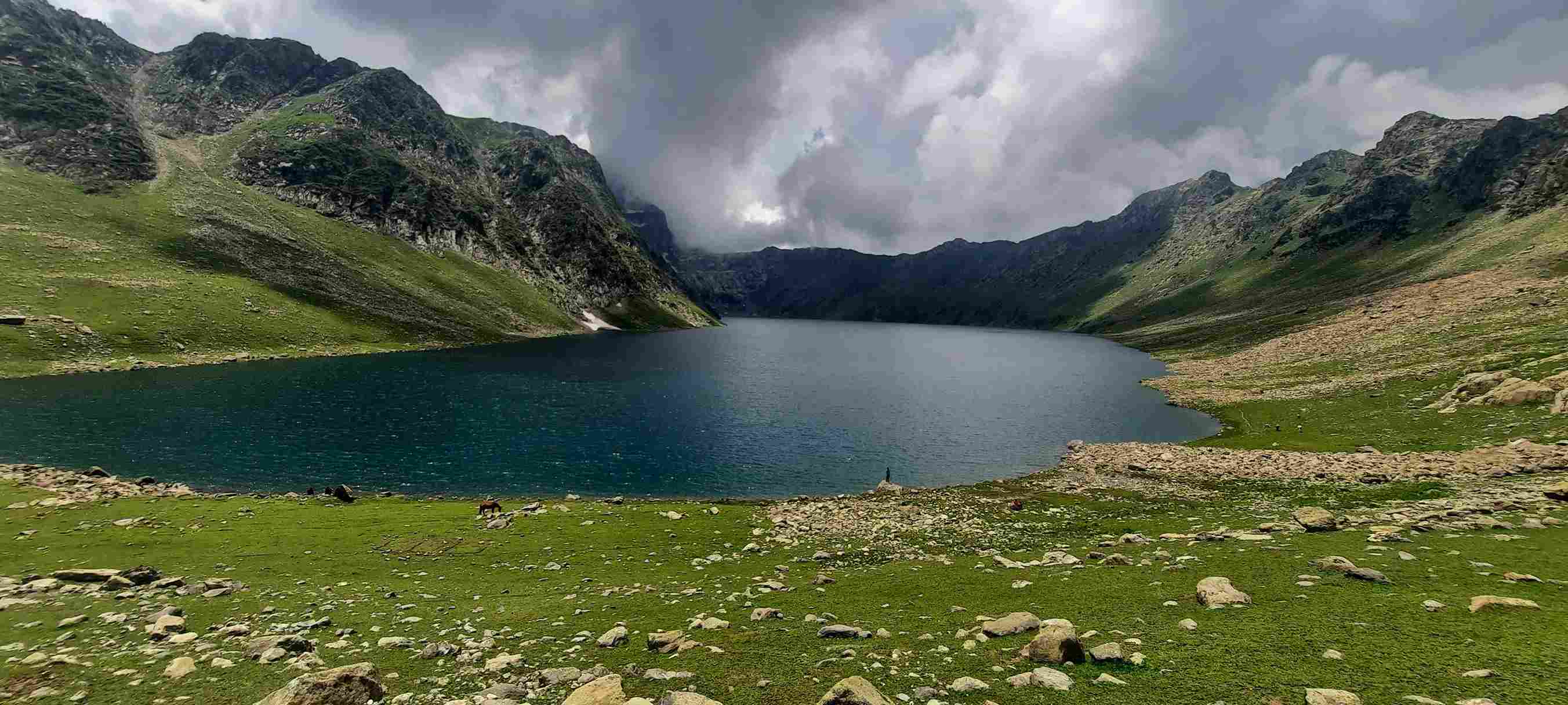
Tarsar Lake is one of Kashmir's most spectacular high-altitude alpine lakes, sitting at approximately 3,795 metres (12,500 ft) in the Lidder Valley near Pahalgam. Fed entirely by glacial snowmelt, its waters shift between turquoise, sapphire, and emerald depending on the light and the season. Along with its twin Marsar Lake — which sits slightly higher at around 4,024 metres (13,200 ft) — Tarsar forms the centrepiece of the Tarsar Marsar Trek, widely regarded as one of the most beautiful alpine lake treks in India.
Unlike most high-altitude lakes in the Himalayas that you simply view from a distance, Tarsar allows you to camp directly on its banks. Waking up beside a glacial lake at 3,800 metres with the Kolahoi range reflected in the water is an experience that very few places in the world can offer.
Where is Tarsar Lake Located?
Tarsar Lake is located in the Anantnag district of Jammu and Kashmir, approximately 20 km east of Kolahoi Mountain in the Lidder Valley. The lake sits within the Pahalgam region and is accessible only by trekking from Aru Valley, about 115 km from Srinagar via Pahalgam. Marsar Lake, the twin lake, lies adjacent to Tarsar on the other side of a mountain ridge and borders the Dachigam National Park.
| Detail | Information |
|---|---|
| Altitude | 3,795 metres (12,500 ft) |
| District | Anantnag, Jammu and Kashmir |
| Trek Starting Point | Aru Valley, near Pahalgam |
| Distance from Srinagar | ~115 km via Pahalgam |
| Twin Lake | Marsar Lake (~4,024 metres) |
| Trek Type | Moderate, multi-day alpine |
| Best Time to Visit | July to September |
The Tarsar Marsar Trek — Overview
Tarsar Lake is reached via the Tarsar Marsar Trek, a 7-day, approximately 48 km trail through the Lidder Valley. It is considered one of the finest alpine lake treks in Kashmir and is often compared to the Kashmir Great Lakes Trek for scenic variety. What makes Tarsar Marsar unique is that you actually circumnavigate the perimeter of Tarsar Lake itself — you see the lake from multiple angles and elevations as the trail wraps around it. This is something you cannot do on most Himalayan lake treks.
| Trek Detail | Information |
|---|---|
| Total Distance | ~48 to 55 km |
| Duration | 5 to 7 days |
| Difficulty | Moderate |
| Starting Point | Aru Valley, Pahalgam |
| Highest Point | Marsar Lake ~4,024 metres (13,200 ft) |
| Best Season | July to September |
Tarsar Marsar Trek Route — Stage by Stage
- Stage 1 — Srinagar to Aru Valley (115 km drive): The trek begins with a drive from Srinagar through Pahalgam to Aru Valley. Aru is a small meadow village on the banks of the Lidder River and serves as the base camp for the trek.
- Stage 2 — Aru Valley to Lidderwat (~11 km, 5 to 6 hours): The trail follows the Lidder River through dense pine forests and open meadows. Lidderwat is a beautiful flat valley campsite known for its wide meadows and views of the surrounding peaks. One of the most scenic days on the trek.
- Stage 3 — Lidderwat to Shekwas (~9 km, 4 hours): The trail climbs steadily from Lidderwat through Humwas Valley, crossing the Tarsar stream. The path narrows as it ascends to Shekwas, a high meadow campsite with panoramic views of distant peaks.
- Stage 4 — Shekwas to Tarsar Lake (~8 km, 4 hours): The first view of Tarsar Lake arrives after a gradual climb. The descent to the lake shore is one of the most rewarding moments on any Kashmir trek. Camp directly beside the lake.
- Stage 5 — Tarsar Lake circumnavigation and onward to Marsar: The trail wraps around Tarsar Lake offering multiple perspectives of the water before ascending to Marsar Lake — the highest point of the trek at 4,024 metres.
- Stage 6 to 7 — Return via Homwas and Aru Valley: The descent passes through Jagmargi Valley and Homwas before returning to Aru Valley for the drive back to Srinagar.
Tarsar Lake vs Marsar Lake — What Is the Difference?
| Tarsar Lake | Marsar Lake | |
|---|---|---|
| Altitude | 3,795 m (12,500 ft) | 4,024 m (13,200 ft) |
| Camping | Yes — popular campsite | Limited, considered sacred |
| Accessibility | More accessible | More remote, often misty |
| Character | Turquoise, open, colour-changing | Mysterious, often cloud-shrouded |
| Folklore | Twin sisters of the Lidder Valley | Sacred, associated with local legends |
Things to Do at Tarsar Lake
- Camping beside the lake: The defining experience of Tarsar. Pitching a tent on the lake shore and waking up to the water and peaks at sunrise is why most trekkers make this journey.
- Photography: The lake changes colour throughout the day — sapphire in the morning, turquoise at noon, gold and pink at sunset. Every hour offers a different image.
- Lake circumnavigation: The trail around the full perimeter of Tarsar Lake is one of its most unique features. You experience the lake from every angle across a half-day loop.
- Stargazing: At 3,800 metres with no light pollution, the night sky above Tarsar is exceptional. The Milky Way is clearly visible on clear nights.
- Meadow walks: The surrounding alpine meadows are home to Gujjar and Bakarwal shepherds during summer, with wildflowers including edelweiss, buttercups, and alpine daisies in full bloom from July.
Best Time to Visit Tarsar Lake
- July: Snow mostly cleared from the trail, meadows turning green, streams full. Some snow patches remain near Marsar. Good for those who want a wilder, more remote feel.
- August: Peak bloom season. Wildflowers at their best, weather most stable, lakes crystal clear. The most popular month on the trail.
- September: Autumn begins. Fewer trekkers, crisp air, golden hillsides. Excellent photography conditions. One of the best months overall.
- October onwards: Trail closes due to heavy snowfall. Aru Valley becomes inaccessible.
How to Reach Tarsar Lake
- By Air: Fly into Srinagar International Airport. From Srinagar, the drive to Aru Valley takes approximately 3 to 4 hours (115 km) via Pahalgam.
- By Road: Drive from Srinagar to Pahalgam (~95 km, 2.5 hours), then continue to Aru Valley (~12 km, 30 minutes). Private cabs from Srinagar to Aru Valley are the most convenient option.
- On Foot: From Aru Valley, the trek to Tarsar Lake covers approximately 28 to 32 km over 3 to 4 days through Lidderwat and Shekwas. Return is via the same or alternate route.
Need a cab from Srinagar to Aru Valley or Pahalgam? Check our cab service in Srinagar — Srinagar to Aru Valley is available as a point-to-point booking.
Fitness and Preparation
The Tarsar Marsar Trek is rated moderate. Beginners with good fitness can complete it but prior trekking experience on at least one multi-day trail is recommended. Daily distances of 8 to 11 km with consistent elevation gain require:
- Comfortable walking 10 km with a 10 kg pack on consecutive days
- Waterproof ankle-support trekking shoes broken in before the trek
- Warm layers for nights — temperatures at Tarsar campsite drop to 2 to 5°C even in August
- A certified local guide — the trail is not marked in sections and weather changes quickly at altitude
Frequently Asked Questions
Where is Tarsar Lake located?
Tarsar Lake is located in the Anantnag district of Jammu and Kashmir, in the Lidder Valley near Pahalgam. It sits at approximately 3,795 metres (12,500 ft) above sea level and is accessible only by trekking from Aru Valley, about 115 km from Srinagar.
How many days does the Tarsar Marsar Trek take?
The full Tarsar Marsar Trek takes 5 to 7 days covering approximately 48 to 55 km. A shorter 3 to 4 day version covering only Tarsar Lake and back from Aru Valley is also possible for trekkers with limited time.
What is the difficulty level of the Tarsar Marsar Trek?
The Tarsar Marsar Trek is rated moderate. It involves daily treks of 8 to 11 km with consistent elevation gain. Beginners with good physical fitness can complete it. Prior multi-day trekking experience and proper preparation are recommended.
Can you camp at Tarsar Lake?
Yes. Camping directly on the banks of Tarsar Lake is one of the most popular activities on the trek and one of the main reasons trekkers choose this route. Most organised trek packages include tent setup at the Tarsar Lake campsite.
What is the difference between Tarsar and Marsar Lake?
Tarsar Lake sits at 3,795 metres and is the more accessible of the two with an established campsite. Marsar Lake is slightly higher at 4,024 metres, more remote, often shrouded in mist, and considered sacred locally. Both are covered on the full Tarsar Marsar Trek circuit.
What is the best time to visit Tarsar Lake?
July to September is the best window. August offers the most stable weather with meadows in full bloom. September brings golden autumn colours and fewer trekkers. The trail is closed from October due to snowfall.
Book a Cab from Srinagar to Pahalgam or Aru Valley
Written by: Aaqib Bhat — Kashmir-based travel writer covering trekking routes, alpine destinations, and travel guides across Jammu and Kashmir for Thrillop.