
Krishansar Lake | Trekking Guide, Route via Nichnai Pass & Practical Tips
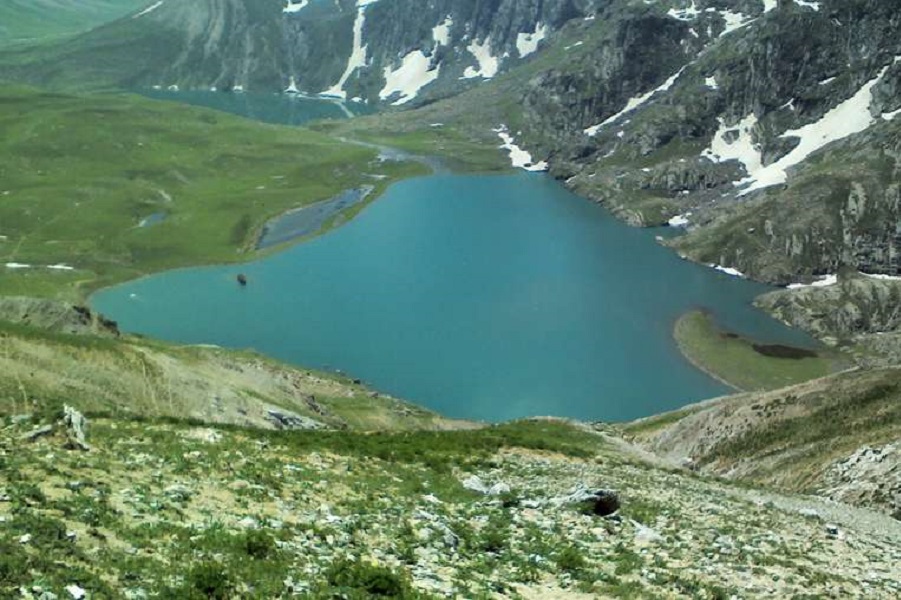
Krishansar Lake is one of the quieter names on the Kashmir Great Lakes Trek — it sits just above its more visited twin, Vishansar Lake, and most trekkers only reach it on the rest day or as a short detour on the way to Gadsar Pass. That makes it one of the least crowded high-altitude lakes on the entire circuit, despite being only a short climb from one of the trek's main campsites.
This guide covers how to reach Krishansar Lake from Sonamarg, the standard day-by-day route via Nichnai Pass and Vishansar, the best season to go, and what to actually pack and prepare for. Written from a Kashmir-based trekking operator's on-ground experience of the Great Lakes route.
Where is Krishansar Lake?
Krishansar Lake lies in the Ganderbal district of Kashmir, at an altitude of approximately 3,700 metres (12,000 feet), fed by snowmelt and glacial runoff. It's a compact lake — under 1 km long — sitting directly adjacent to and at a slightly higher elevation than Vishansar Lake. Together, the two lakes form the source of the Neelum (Kishanganga) River, which flows onward through Gurez toward Pakistan-administered Kashmir. In local Kashmiri, the suffix "-sar" simply means lake — which is why nearly every lake on this trek (Vishansar, Krishansar, Gadsar, Satsar) shares the ending.
The lake is best known among trekkers for its clear-water reflections of the surrounding snow-capped peaks, its seasonal wildflower meadows, and its population of brown trout.
How to Reach Krishansar Lake
Krishansar Lake is accessible only on foot, as part of the Kashmir Great Lakes Trek. There's no road or vehicle access beyond the trailhead.
- Srinagar to Sonamarg: Around 80 km by road, roughly 2 to 2.5 hours.
- Sonamarg to Shitkadi/Shutkadi (trailhead): A short drive from Sonamarg to the actual start of the trek.
- Shitkadi to Krishansar Lake: A multi-day trek via Nichnai Pass and Vishansar Lake — there is no direct or shorter path.
Krishansar Lake Trek — Day-by-Day Route
| Day | Route | Distance / Altitude |
|---|---|---|
| Day 1 | Sonamarg (via Shitkadi) → Nichnai campsite | ~11 km, campsite at ~3,500 m |
| Day 2 | Nichnai → Nichnai Pass (~4,100 m) → Vishansar Lake | ~12 km, Vishansar at ~3,700 m |
| Day 3 | Rest/acclimatisation day at Vishansar, with a short side trek to Krishansar Lake | ~2–3 km round trip |
| Day 4 | Vishansar → past Krishansar → Gadsar Pass (~4,200 m) → Gadsar Lake | ~11 km, highest point of the trek |
| Day 5 onward | Continue the full Kashmir Great Lakes circuit via Satsar and Gangbal, or turn back to Sonamarg | Varies by itinerary |
Most trekkers see Krishansar and Vishansar together — on a clear day, both twin lakes are visible at once from higher up near Gadsar Pass. The trail beyond Vishansar climbs roughly 250 metres to Krishansar before the harder ascent to Gadsar Pass begins.
Best Time to Visit Krishansar Lake
| Period | Conditions |
|---|---|
| Late June – July | Snow largely melted, meadows greening up, passes opening |
| August | Peak trekking window, wildflower meadows in full bloom, warmest conditions |
| Early September | Clearer skies, fewer trekkers, but noticeably colder nights |
| October – May | Passes and trail snowbound; not accessible for standard trekking |
July to September is the reliable window for the full trek. The lake freezes over completely in winter, and the route is only attempted outside this window by specialised winter mountaineering teams.
Activities at Krishansar Lake
- Alpine camping: Lakeside camps near Vishansar with sunrise reflections over Krishansar are one of the trek's defining experiences.
- Photography: Mirror-still water, wildflower meadows, and the surrounding snow-capped ridgeline make this one of the most photographed stretches of the Great Lakes circuit.
- Trout fishing: Brown trout inhabit both Krishansar and Vishansar. A fishing permit from the J&K Fisheries Department is required before casting a line.
- Trek extension: Continue past Krishansar over Gadsar Pass to Gadsar, Satsar, and Gangbal Lake to complete the full Kashmir Great Lakes circuit.
Preparation & Practical Tips
- Acclimatise properly. Spend a day at Sonamarg's lower altitude before ascending, hydrate well, and avoid heavy exertion on the first day.
- Gear checklist: Sturdy trekking boots, warm layers, a waterproof jacket, a sleeping bag rated for sub-zero nights, trekking poles, and a reliable headlamp.
- Hire a local guide. If you're unfamiliar with high-altitude trekking, a guide or porter makes route-finding and camp logistics considerably safer.
- Environmental care. Carry all waste back out — this is a fragile alpine ecosystem with no waste infrastructure on the trail.
- Permits. Standard trekking permits and, separately, fishing permits if you plan to fish, should be arranged in advance through your trek operator.
Safety Considerations
Watch for symptoms of altitude sickness — headache, nausea, dizziness — and descend immediately if symptoms worsen rather than pushing through. Weather at this altitude can change quickly, so plan early starts and always carry rain and thermal layers regardless of the forecast. Mobile connectivity is patchy to non-existent for most of the route, with limited BSNL signal reported only near Nichnai Pass — share your itinerary with someone before you set out, and trek with a guide if you're not experienced at this altitude.
Krishansar Lake — Quick Reference
| Question | Answer |
|---|---|
| Altitude | ~3,700 m (12,000 ft) |
| District | Ganderbal, Kashmir |
| Access | On foot only, via the Kashmir Great Lakes Trek from Sonamarg |
| Nearest lake | Vishansar Lake, its twin, at a slightly lower elevation |
| Best season | Late June to early September |
| Trek difficulty | Moderate to difficult |
| Typical trek length to reach it | 3 days from Sonamarg |
FAQs — Krishansar Lake
How do I reach Krishansar Lake?
Krishansar Lake is reached only on foot, as part of the Kashmir Great Lakes Trek starting from Sonamarg. Trekkers first reach Sonamarg by road from Srinagar (about 80 km), then trek via Nichnai Pass to Vishansar Lake, with Krishansar a short climb further beyond it. The ideal trekking season is late June to early September.
How far is Krishansar Lake from Vishansar Lake?
Krishansar Lake sits directly adjacent to Vishansar Lake, at a slightly higher elevation, roughly 250 metres of ascent above it. Most itineraries treat the two as a single stop, with trekkers camping at Vishansar and taking a short side trek up to Krishansar.
What is the best time to trek to Krishansar Lake?
Late June through early September is the ideal window. By this time the winter snow has melted, meadows are green, and the high passes are open. September brings clearer skies and fewer trekkers, but colder nights. Outside this window, the route is snowbound and only suitable for specialised winter expeditions.
Can I fish at Krishansar Lake?
Yes, both Krishansar and Vishansar Lake are home to brown trout. Anglers need a fishing permit from the Jammu & Kashmir Fisheries Department before casting a line, so it's worth arranging this in advance through your trek operator.
Is the Krishansar Lake trek suitable for beginners?
The trek is rated moderate to difficult due to the altitude, rocky sections, and stream crossings involved. First-time high-altitude trekkers can attempt it with proper acclimatisation, the right gear, and ideally an experienced local guide, but it isn't a casual walk-in destination.
Is Krishansar Lake part of a longer trek?
Yes. Krishansar Lake is one stop on the wider Kashmir Great Lakes Trek, which continues past it over Gadsar Pass to Gadsar Lake, then on to Satsar and Gangbal Lake before descending to Naranag — a full circuit that typically takes 6 to 8 days.
Plan Your Kashmir Great Lakes Trek With Thrill Top Journeys
Krishansar Lake is best experienced as part of the wider Great Lakes circuit, starting from Sonamarg and continuing on toward Gangabal Lake. If you'd rather start with a shorter, more accessible trek in the same region, the Thajiwas Glacier Trek is a good warm-up. Our team can help with permits, gear guidance, and a custom Great Lakes itinerary.
Author Bio
Basit Bhat is a travel writer and entrepreneur from Kashmir. Passionate about culture, landscapes, and storytelling, he shares immersive travel experiences that inspire readers to connect with the beauty and heritage of Jammu & Kashmir.