
Marsar Lake Kashmir The Sacred Twin of Tarsar on the Tarsar Marsar Trek
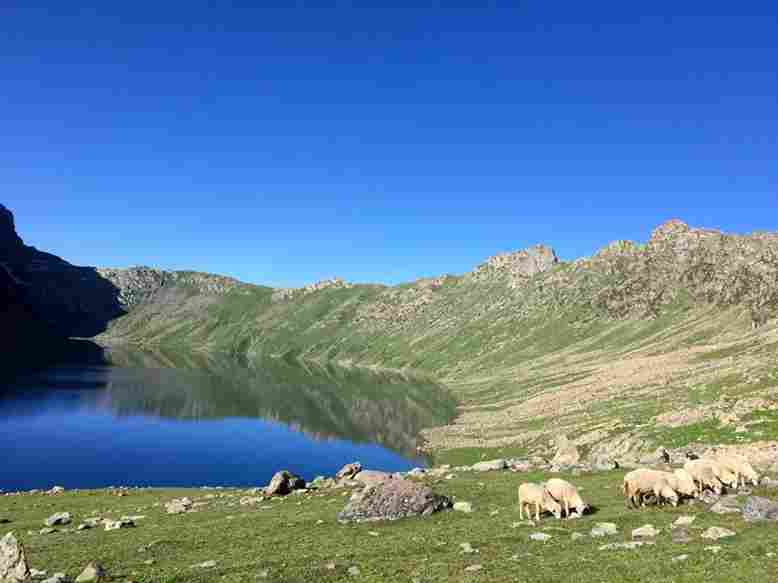
Marsar Lake is one of the most remote and mysterious high-altitude lakes in Kashmir. Sitting at approximately 4,024 metres (13,200 ft) in the Lidder Valley near Pahalgam, it is the higher and less visited of the two famous twin lakes — the other being Tarsar Lake at 3,795 metres. While Tarsar welcomes trekkers with open meadows and established campsites, Marsar sits tucked behind a mountain ridge, frequently shrouded in cloud and mist, considered sacred by local Kashmiri communities, and rarely seen in full clarity even by those who reach it.
Marsar is reached as part of the Tarsar Marsar Trek — a 7-day, approximately 48 to 55 km alpine circuit from Aru Valley near Pahalgam, rated moderate and widely regarded as one of the most beautiful lake treks in India.
Where is Marsar Lake Located?
Marsar Lake is located in the Anantnag district of Jammu and Kashmir, in the Lidder Valley approximately 20 km east of Kolahoi Mountain. It borders the Dachigam National Park and sits on the far side of a mountain ridge from Tarsar Lake. The lake is only accessible on foot via the Tarsar Marsar Trek from Aru Valley, about 115 km from Srinagar via Pahalgam.
| Detail | Information |
|---|---|
| Altitude | 4,024 metres (13,200 ft) |
| District | Anantnag, Jammu and Kashmir |
| Trek Starting Point | Aru Valley, near Pahalgam |
| Distance from Srinagar | ~115 km via Pahalgam |
| Twin Lake | Tarsar Lake (3,795 metres) |
| Nearest National Park | Dachigam National Park |
| Best Time to Visit | July to September |
Marsar Lake vs Tarsar Lake — Key Differences
Marsar and Tarsar are separated by a single mountain ridge yet feel completely different in character. Most trekkers who complete the full circuit say Tarsar is the scenic highlight while Marsar is the emotional one.
| Marsar Lake | Tarsar Lake | |
|---|---|---|
| Altitude | 4,024 m (13,200 ft) | 3,795 m (12,500 ft) |
| Camping | Not recommended — considered sacred | Yes — popular campsite on the banks |
| Accessibility | More remote, requires full trek circuit | More accessible, reachable in 3 to 4 days |
| Visibility | Often cloud-covered and misty | Usually clear, colour-changing waters |
| Character | Sacred, mysterious, rarely photographed clearly | Open, turquoise, photographed extensively |
| Local significance | Considered sacred, associated with spirits | Trekking and camping destination |
The Tarsar Marsar Trek — How to Reach Marsar Lake
Marsar Lake is the highest point on the Tarsar Marsar Trek and is reached after passing Tarsar Lake on the circuit. The full trek route from Aru Valley is as follows:
- Stage 1 — Srinagar to Aru Valley (115 km drive): The trek begins with a 3 to 4 hour drive from Srinagar through Pahalgam to Aru Valley, the base camp and starting point for the entire circuit.
- Stage 2 — Aru Valley to Lidderwat (~11 km, 5 to 6 hours): The trail follows the Lidder River through pine forests and open meadows. Lidderwat is the first major overnight campsite — wide, flat, and scenic.
- Stage 3 — Lidderwat to Shekwas (~9 km, 4 hours): A steady climb through Humwas Valley crossing the Tarsar stream. Shekwas is a high meadow campsite with panoramic ridge views.
- Stage 4 — Shekwas to Tarsar Lake (~8 km, 4 hours): First view of Tarsar Lake. The descent to the lake shore is one of the most rewarding moments on the trek. Overnight camping beside the lake.
- Stage 5 — Tarsar to Marsar Lake: The trail climbs from Tarsar, wraps around its perimeter, and ascends to the ridge separating the twin lakes. Marsar appears below — at 4,024 metres, this is the highest point of the entire trek. The descent to Marsar's shores and onwards to the next campsite is the most dramatic section of the circuit.
- Stages 6 to 7 — Return via Homwas and Aru Valley: The return route descends through Jagmargi Valley to Aru Valley for the drive back to Srinagar.
Need a cab from Srinagar to Aru Valley? Check our cab service in Srinagar — point-to-point bookings to Pahalgam and Aru Valley are available.
Marsar Lake Trek Quick Facts
| Trek Detail | Information |
|---|---|
| Total Distance | ~48 to 55 km (full circuit) |
| Duration | 5 to 7 days |
| Difficulty | Moderate |
| Highest Point | Marsar Lake — 4,024 metres (13,200 ft) |
| Starting and Ending Point | Aru Valley, Pahalgam |
| Best Season | July to September |
What Makes Marsar Lake Unique
- Highest point on the trek: At 4,024 metres, Marsar sits nearly 230 metres higher than Tarsar. The altitude difference is felt — most trekkers reach it breathing harder and moving slower than at any other point on the route.
- Perpetually misty: Local shepherds and trekkers both note that Marsar is almost never fully visible. Cloud, mist, or fog covers some part of it at nearly all times. The rare moment of full clarity feels genuinely earned.
- Sacred character: Kashmiri communities consider Marsar sacred and avoid camping on its shores. Folklore describes the lake as guarded by spirits — the "Lake of Spirits" in local tradition. This is why there is no permanent campsite at Marsar, unlike Tarsar.
- Wildlife on the approach: The alpine slopes approaching Marsar are habitat for Himalayan brown bears, ibex, and — very rarely — snow leopards. The area borders Dachigam National Park, one of Kashmir's most important protected wildlife zones.
- Most dramatic photography on the trek: Because Marsar is almost always partially hidden, the photographs taken here — of the lake appearing through gaps in cloud against steep cliffs — are unlike any other Kashmir lake photography.
Best Time to Visit Marsar Lake
- July: Trail opens as snow clears. Some snow patches remain near Marsar at 4,000 metres. More remote feel with fewer trekkers.
- August: Most stable weather, wildflowers in full bloom at lower elevations, best overall conditions for the full circuit.
- September: Autumn colours begin below the treeline. Fewer people on the trail. Cold nights at altitude — temperatures drop to near zero at Marsar's elevation even in early September.
- October onwards: Trail closes due to snowfall. Aru Valley becomes inaccessible for trekking.
Things to Do at and Around Marsar Lake
- Ridge viewpoint between the twin lakes: The ridge separating Tarsar and Marsar offers views of both lakes simultaneously — one of the most spectacular viewpoints on any Kashmir trek.
- Photography in the mist: Marsar through cloud and mist is one of Kashmir's most dramatic natural scenes. Patience is rewarded here more than anywhere else on the circuit.
- Wildlife watching on the approach: The alpine terrain between Tarsar and Marsar is the most likely section of the trek for wildlife sightings — Himalayan brown bears and ibex are occasionally spotted.
- Stargazing from Tarsar campsite: While camping is not done at Marsar, the Tarsar campsite nearby at 3,800 metres offers exceptional stargazing at night with the Milky Way visible on clear evenings.
Travel Tips for Marsar Lake
- Do not attempt to camp at or near Marsar Lake — locals consider it sacred and it is not an established campsite. Camp at Tarsar and do a day visit to Marsar.
- The altitude at Marsar is 4,024 metres. Acclimatise properly during the lower stages of the trek before pushing to this elevation.
- Weather at Marsar changes faster than at Tarsar due to the higher elevation and ridge position. Start the Marsar section early in the morning to maximise clear conditions.
- Go with a certified local guide. The trail between Tarsar and Marsar is not clearly marked in sections and the terrain near the ridge is steep.
- Carry warm layers. Temperatures at 4,000 metres can drop sharply even in August.
Frequently Asked Questions
Where is Marsar Lake located?
Marsar Lake is located in the Anantnag district of Jammu and Kashmir, in the Lidder Valley near Pahalgam. It sits at approximately 4,024 metres (13,200 ft) above sea level and borders the Dachigam National Park. It is only accessible by trekking from Aru Valley, about 115 km from Srinagar.
How do you reach Marsar Lake?
Marsar Lake is reached via the Tarsar Marsar Trek from Aru Valley near Pahalgam. The full circuit covers 48 to 55 km over 5 to 7 days. Marsar is the highest point on the route at 4,024 metres and is reached after passing Tarsar Lake, typically on day 5 of the full itinerary.
Can you camp at Marsar Lake?
Camping at Marsar Lake is not recommended and is generally avoided. Local Kashmiri communities consider the lake sacred. The established campsite on this section of the trek is at Tarsar Lake, from where Marsar is visited as a day trip or passed through on the circuit route.
What is the difference between Tarsar and Marsar Lake?
Marsar sits at 4,024 metres — about 230 metres higher than Tarsar at 3,795 metres. Marsar is more remote, almost always cloud-covered, considered sacred, and has no campsite. Tarsar is open, colour-changing, accessible, and has an established camping area on its banks. Both are covered on the full Tarsar Marsar Trek.
Is Marsar Lake part of the Tarsar Marsar Trek?
Yes. Marsar Lake is the highest point and one of the two main destinations on the Tarsar Marsar Trek. The full circuit from Aru Valley covers both lakes and takes 5 to 7 days.
What is the best time to visit Marsar Lake?
July to September is the only accessible window. August offers the most stable weather. September brings fewer trekkers and golden autumn colours at lower elevations. The trail closes from October due to snowfall.
Tarsar Lake — Complete Trek Guide
Book a Cab from Srinagar to Aru Valley
Written by: Aaqib Bhat — Kashmir-based travel writer covering trekking routes, alpine destinations, and travel guides across Jammu and Kashmir for Thrillop.